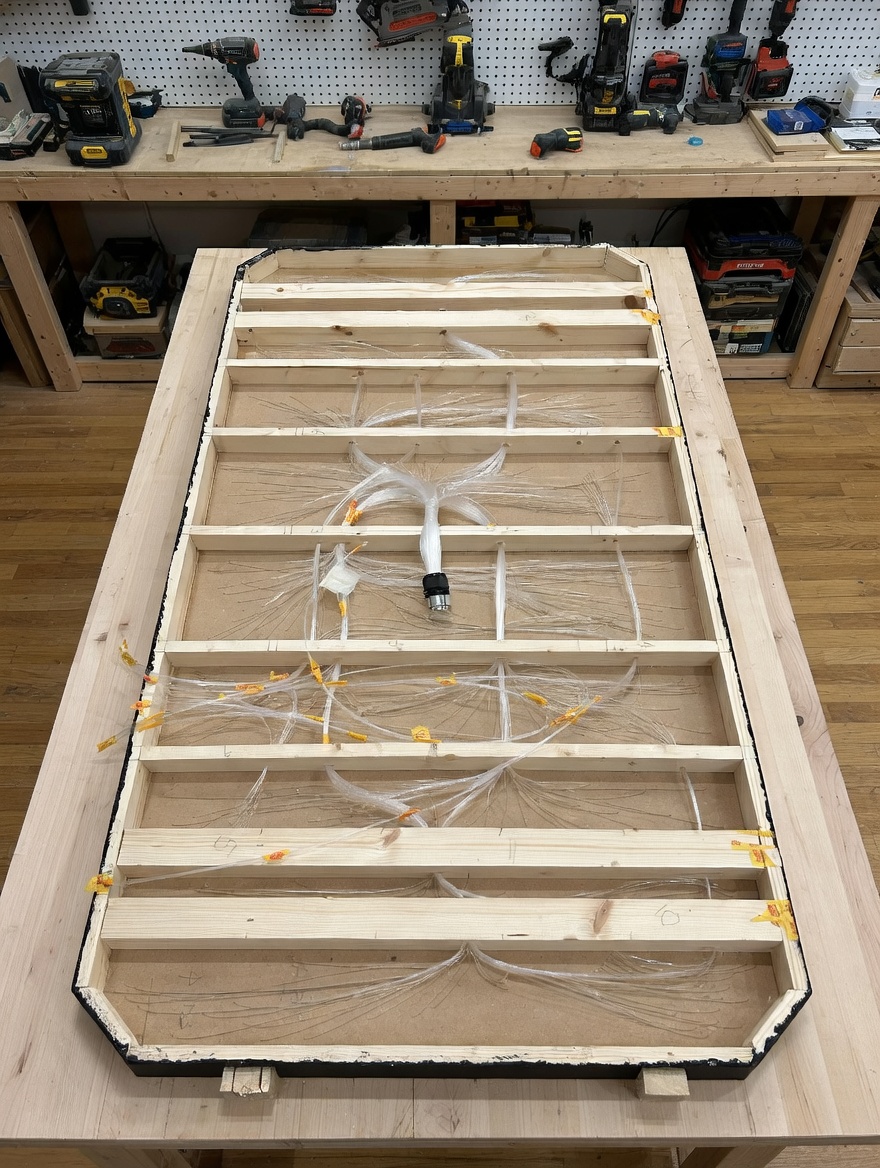
From Messy Workshop to Cosmic Masterpiece: Threading 600 Fiber Optic Strands for a Nebula Epoxy TableCreating a fiber optic nebula table is a true labor of love. With 600 individual strands transforming into twinkling stars set in swirling epoxy “space,” the process is equal parts woodworking precision and artistic vision.The image above shows the underside of my table during the intensive threading phase—now neatly displayed on a clean workbench in a tidy workshop, with every bundle organized and ready for the light engine.Planning and Preparation
Everything begins with a star layout design. I plot positions for all 600 lights on the tabletop substrate (usually MDF or plywood). Tiny holes (0.75–1 mm) are drilled precisely through the top panel. The wooden frame underneath—with its numbered support slats (visible as 1, 2, 3, etc.)—provides structural support and doubles as an organization system during threading.The Tedious Threading Process
This is the heart of the project—and the most time-consuming part:
- Fiber Preparation — High-quality optical fibers are cut to slightly longer-than-needed lengths from spools.
- Insertion — Working systematically section by section, each strand is gently pushed through its hole from the top surface (or pulled from below). On the underside, I carefully pull it through, leaving 1–5 mm protruding on top for the best star effect.
- Organization & Labeling — As fibers emerge below, they’re grouped by section using the numbered supports. Yellow tape tags (exactly as you see in the image) keep everything sorted and prevent mix-ups.
- Bundling to Light Engine — All 600 ends converge at the central black fitting. This connector channels light from the remote LED engine (RGB, twinkling, or app-controlled).
- Securing — Each bundle is taped, zip-tied, and sealed around the holes with silicone or hot glue to prevent resin leaks later.
Builders report this step alone takes 15–40+ hours for 600 strands. One wrong move means re-threading—so patience (and good lighting) is everything!Creating the Nebula Effect
Once threading is complete and the underside is protected:
- The top surface gets artistic nebula treatment: layered pours of tinted epoxy (deep blues, purples, magentas) with mica powder, glitter, or alcohol inks swirled in for galaxy clouds.
- Fiber tips are trimmed nearly flush.
- A final thick, crystal-clear epoxy flood coat encases everything, creating incredible depth and perfectly diffusing the starlight.
Curing takes several days, followed by sanding and polishing to a mirror-like glass finish.Lighting It Up
The light engine plugs into the central port. When powered on, each of the 600 fibers transmits a brilliant pinpoint of light through the resin—turning the table into a glowing portable universe you can change colors or set to twinkle with a tap on your phone.Final Thoughts
From the organized chaos of 600 strands on the workbench to the finished nebula masterpiece, this project showcases incredible craftsmanship. The threading stage captured here is where the magic truly begins.Would you tackle a project like this? Smaller versions (100–200 fibers) are more beginner-friendly if you want to try! Drop a comment below—I’d love to hear your resin or fiber optic stories.

Comments are closed for this post.